

Child Sexual Abuse Medical Assessments
In cases where it is reported or believed that a child has experienced sexual abuse, the initial response from all practitioners should be to listen carefully to what the child says and to observe the child’s behaviour and circumstances. Practitioners must:
- Clarify the concerns.
- Offer reassurance about how the child will be kept safe.
- Explain what action will be taken and within what timeframe.
The child must not be pressed for information, led or cross-examined or given false assurances of absolute confidentiality, as this could prejudice police investigations, especially in cases of sexual abuse.
In all cases, regardless of whether the abuse is recent or non-recent, consideration must always be given to whether or not the child requires a sexual abuse medical assessment. If the decision is that the medical assessment is not required, the rationale for this decision must be clearly documented. A CSA medical should be requested if there are any concerns about a child or young person having been sexually assaulted, irrespective of their gender identity. Consideration should also be made about who the alleged perpetrator is, and if this is the child’s parent or carer, that care is taken that the child is not spoken to or medically assessed whilst this person is present.
Expert professional advice regarding whether a medical assessment is indicated, can be obtained from the commissioned paediatric Child Sexual Assault Assessment Centre (CSAAS)/Sexual Assault Referral Centre (SARC) provider, Mountain Healthcare: 0330 223 0099.
‘Recent’: Abuse which has occurred between 0 and 13 days ago
‘Non-recent’: Abuse which has occurred 14 or more days ago
Who Should Accompany the Child
Usually a child or young person is accompanied to their CSA medical by a person with Parental Responsibility and a Social Worker.
It is not appropriate for the alleged perpetrator to accompany the child even if they hold Parental Responsibility.
A trusted adult (e.g., a family member or friend) may accompany the child if the child wishes, but they cannot give legal consent unless they hold Parental Responsibility.
Consent
Informed consent should be taken for each child sexual assault medical assessment; ideally this will be written consent, but when consent is being obtained over the telephone, documentation that verbal consent was given should be written in the child’s medical record.
The following people may give consent to a child sexual assault medical assessment:
- If the child/young person is aged 16 or over they are presumed competent to give consent for themselves unless there is a reason that they cannot (such as profound learning disability with severe communication difficulties).
- If the Child/Young Person is under 16 they may give consent if assessed as Gillick competent meaning they fully understand the nature and implications of the examination. However, CSA medicals require a high level of competence due to their legal and emotional complexity.
- Any person with Parental Responsibility (PR), providing they have the capacity to do so.
- The Local Authority when the child is the subject of a Care Order (though the parent should be informed).
- The High Court when the child is a ward of court.
- A Family Proceedings Court as part of a direction attached to an Emergency Protection Order, an Interim Care Order or a Child Assessment Order.
Consent cannot be given by a trusted adult (e.g., a family member or friend) who may be accompanying the child, unless they hold Parental Responsibility.
If consent is withheld for any part of the assessment, including examination, photography or investigation then this is documented, including subsequent discussions and any actions taken.
If a strategy meeting/discussion has recommended a sexual assault medical assessment but the person with Parental Responsibility refuses to give consent, the professionals involved should consider the case in its entirety. If they decide the examination is in the child’s best interest and/or there is a public interest, then they should refer to the Local Authority to obtain consent by Court Order. Advice can be taken from senior colleagues and indemnity organisations. The Local Authority would need a Court Order to override the refusal of the party with Parental Responsibility.
Child Sexual Abuse Medical Assessments
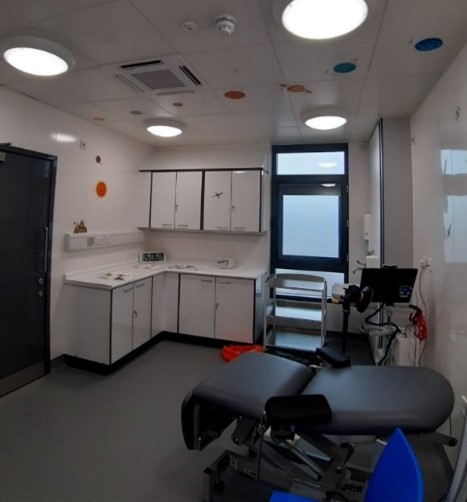
All CSA medicals are child centred and CSAAS/SARC staff will always follow the child’s lead by listening to the child’s verbal and non-verbal cues in order for them to remain comfortable and settled throughout their appointment. The CSAAS/SARC is welcoming, and child focused with work ongoing to further the aesthetics of the environment.
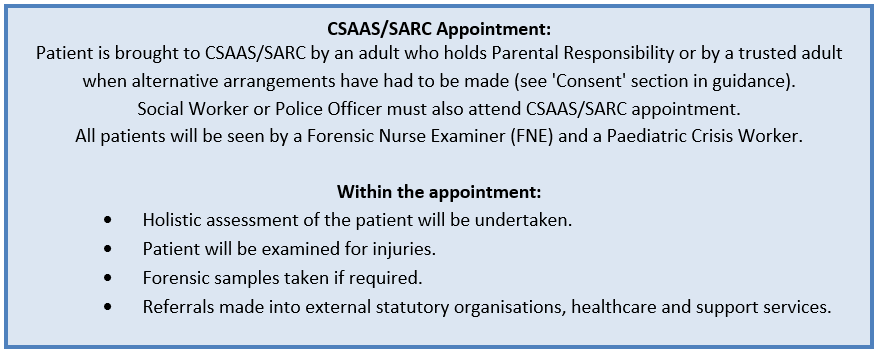
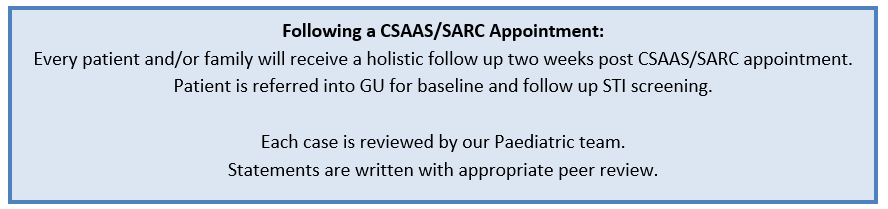


Requesting a Child Sexual Abuse Medical Assessment
Requests for a Child Sexual Abuse Medical Assessment can only be made by North Yorkshire Police or City of York Council Children’s Social Care/North Yorkshire County Council Children and Families Service. Regardless of who makes the request there must be discussion between the allocated Social Worker and police officer leading the case to agree the arrangements for the assessments including who will liaise with Mountain Health.
Child Sexual Abuse Medical Assessments can be requested by the Police or Social Care as an action arising from a strategy meeting or prior to the strategy with the intention of informing the discussions during the meeting. CSAAS/SARC will be invited to strategy meetings to ensure expert views are considered when determining next steps. A Child Sexual Abuse Medical Assessment should not be requested in order to determine if a strategy meeting is required.
It should be noted that there are different arrangements for children and young people 0-12 years, and children and young people aged 13- 18 years; and for recent and non-recent abuse. (Below)
- Children & Young People Aged 0-12 years, Acute Pathway (0-13 days)
- Children & Young People Aged 13 – 18 years, Acute Pathway (0-13 days)
- Children & Young People Aged 0-15 years, Non-Acute Pathway (14+ days)
- Young people aged 16 – 18 years, Non-Acute Pathway, (Outside of forensic timescales. Young people aged between 16-18 years will usually be seen within the adult service and professionals are encouraged to ring Mountain Healthcare for advice around forensic timescales to establish if a young person follows the acute or non-acute pathway)
Cases where children may also require assessment of physical injuries in addition to child sexual abuse assessment
In cases where children also require assessment of their physical injuries, consideration should be given to prioritising this, particularly where the injuries are severe or require immediate attention and treatment. (reference CP Medical Assessment procedures). Discussions should take place between police/CFS, the on-call paediatrician and Mountain Healthcare, to agree:
- Timing of the assessments
- Location and coordination of the assessments (NB it may be possible for Mountain Healthcare to conduct off-site appointments if the child is unable to attend the paediatric CSAAS/SARC and/or to avoid the need for multiple assessments)
Further information can be found at:
http://www.hazlehurstcentre.org
Page reviewed: April 2026


 View all our news