

Dog Safety: How to keep your child and dogs safe and happy together
Perhaps more than any other animals, dogs and humans have lived together for centuries; dogs are our companions and parts of our families. They can bring fun to and happiness to family life, but can also put our children at risk.
Nobody expects their dog(s) to bite, but it is important to remember that any dog may bite if they feel threatened and that they have no other option. We often underestimate the likelihood of our own dog(s) biting, but 91% of bites to children happen at home with a dog they know.
If you have a child and a dog, there are two key things you should do to ensure your child(ren) and pet are safe:
- When your dog(s) and child(ren) are together you should supervision their interactions
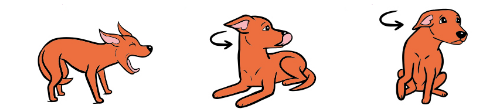
- You need to understand your dog’s body language
Keeping a watchful eye
We recognise that supervising your child(ren) and dog(s) together can be difficult, but supervision can be split into three things you need to do:
- Stay Close – ensure that you watch and listen to what your dog and child(ren) are doing so you can respond quickly if anything happens
- Know when to step-in – if you are concerned about how your dog and child(ren) are interacting, if they are behaving in an unsafe manner or if either your child(ren) or dog looks uncomfortable
- Take action to separate your dog(s) and child(ren) – keep your child(ren) and dog(s) separate whey you can’t monitor what is going on, for example, if you are cooking meals, cleaning the house or answering the front door. Safety gates are a good method to separate your dog(s) and child(ren) when you are not able to closely monitor them or you could take you child or dog with you if you have to go into another room or garden.
Learn your dog’s body language
Dogs will often display how they are feeling in their body language. It is important to learn your dog’s reactions to things so you can anticipate how they may react to different unsafe situations and stop situations happening before they begin.
The RSPCA outlines distinct behaviours that dogs will display if they are scared, when they become angry or unhappy. Examples of this can include:
- A worried dog may have their head low and ears back with their tail tucked
- An angry dog may have a tense body, weight forward with their ears and tail up looking directly at you
Every dog is individual and may have different ways of communicating their levels of anxiety, anger, happiness, fear or excitement. You need to recognise these signs in your own dog so you can intervene quickly should the need arise.
To help in this, the RSPCA and the Dogs Trust have developed guides to help you better understand your dog.
- RSPCA – Understanding dog behaviour – https://www.rspca.org.uk/adviceandwelfare/pets/dogs/behaviour/understanding
- The Dog’s Trust – https://www.dogstrust.org.uk/dog-advice/understanding-your-dog/body-language
For more information you can also view the Child Accident Prevention Trust’s dog safety fact sheets including “child safety around dogs” and “your dog and your baby”, including versions in Arabic, Bengali, Polish, Punjabi, Urdu and Welsh.


 View all our news